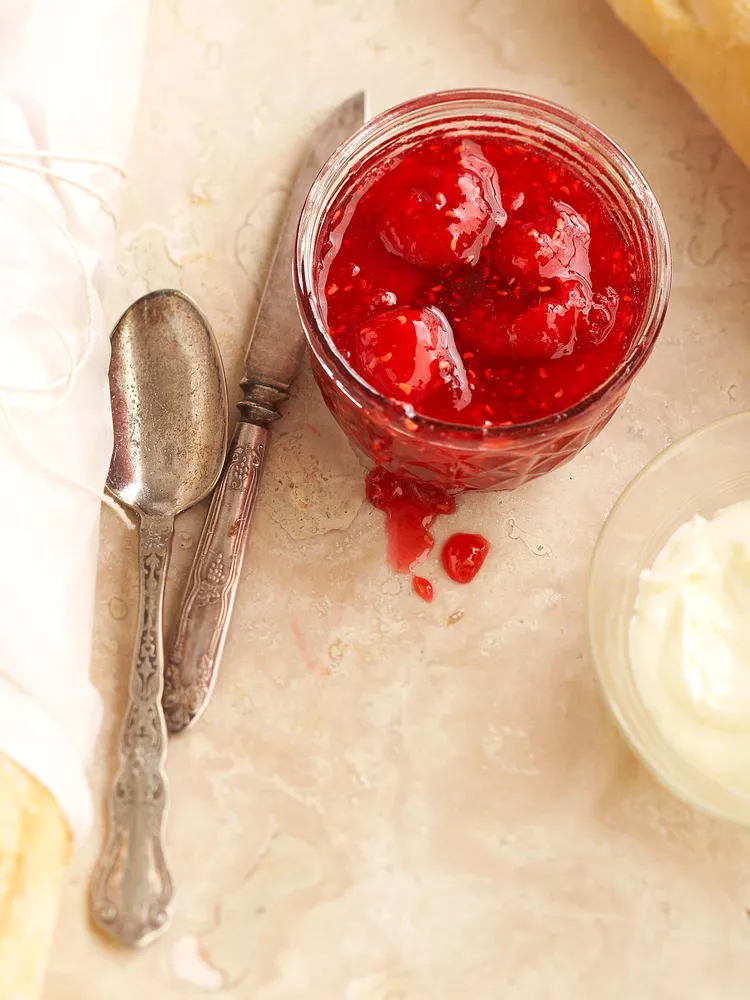
If you’re like the typical Better Homes and Gardens editor or Test Kitchen staff member, you’ve consumed them countless times spread on toast as part of a diner breakfast and have also savored them inside PB&J for more lunches and snacks than you could count. We’re talking about what’s inside the glass jars that are nearly ubiquitous in American refrigerators: Fruit spreads. They’re a pantry staple in many households, however, they’re highly misunderstood.
When presented with the question of “what’s the difference between jam, jelly, and preserves?” at trivia night recently, a BHG writer admitted that she was stumped. Since most members of the team echoed that sentiment, we figured it was about time to go back to basics—and bring in the pros to explain the difference between jam, jelly, and preserves.
- Jacob Ouellette, marketing specialist for Stonewall Kitchen
- Danny Roberts, owner, jam maker, and lead baker of Alchemist's Jam in McMinnville, Oregon
What’s the Difference Between Jam, Jelly, and Preserves?
We’ve been using them as condiments on everything from English muffins to scones to pancakes for decades, and are sweet on infusing them into recipes like Thumbprint Cookies, Bakewell Tarts, and Peanut Butter and Jelly Banana Bread. Yet very few of us have really thought about what makes the core categories of fruit spreads (jam, jelly, preserves) unique. Turns out, there are some major differences—which are regulated by the FDA.
Jam
Although it can be made in more savory styles, as proven by our Tomato-Basil Jam and Quick Garlic-Onion Jam recipes, jam is typically made with crushed, chopped, mashed, or puréed fruit.
The base ingredient is cooked with sugar and an acid, such as lemon juice, until it reduces down into a thicker consistency. All fruit naturally contains pectin in its seeds, skin/peel, and core, and sometimes, the fruit contains enough to help jam gel up enough for it to be “jam.” Grapes, plums, and apples are usually high enough in pectin to gel on their own. If the recipe features a low-pectin fruit (like cherries, pineapple, pears, peaches, strawberries, and rhubarb) the formula may include commercial pectin to help bolster the texture.
“Jam contains the fruit, seeds and all. We prefer making jams because they can be made with less sugar and contain the whole fruit. They’re also nice for spreading because the fruit has been mashed before the product is gelled,” explains Danny Roberts, owner, jam maker, and lead baker of Alchemist's Jam in McMinnville, Oregon.
Jam is spoonable yet spreadable, and is usually looser, chunkier, and less sweet than jelly. To qualify as a jam, according to the FDA, a recipe must be made with a single fruit or an approved combination of fruits and needs to contain at least 45 percent fruit and 55 percent sugar.
This means that Strawberry-Rhubarb Freezer Jam would qualify, but technically, Sugar-Free Blueberry-Strawberry Jam would need to be renamed “Sugar-Free Blackberry-Strawberry Spread” to be sold at stores since it doesn’t meet the sugar quota (but it is still delicious!).
Jelly
“Jelly, on the other hand, is a clear, bright product,” says Jacob Ouellette, marketing specialist for Stonewall Kitchen.
It’s generally made by cooking fruit juice and sugar with pectin, the gelling agent, and an acid, like lemon juice. Commercial pectin is usually added to yield a jiggly and firm yet spreadable viscosity. (If you’re ready to try out the process at home, our Grape Juice Jelly recipe will coach you through it.)
Since jelly recipes start with juice instead of fruit, the finished product is evenly-textured throughout. If you take a scoop out from the jar, jelly will hold its shape. Jelly contains the most pectin and sugar, and the least pulp, of all three of these fruit spreads.
To qualify as a jelly per FDA standards, a product must include real fruit juice and be at least 65 percent sugar.
Preserves
“Preserves, though similar to the consistency of a jam, are small, whole fruit or uniformly-sized pieces in a clear, slightly gelled syrup,” Ouellette says.
Think of fruit preserves like a mash-up of jam and jelly. Preserves are made with fruits simmered in boiling water until soft. The fruit is then cooked with sugar and fruit juice, which allows this blend to thicken. Since the fruit isn’t mashed or puréed, the pieces are tender and plump, making this the chunkiest fruit spread of all.
Marmalades are a type of fruit preserves made with citrus fruits, such as grapefruit, kumquats, lemons, or oranges.
Products labeled as preserves or marmalade must contain at least 65 percent soluble solids, or fruit pieces, according to the FDA.
Jam and jelly are ideal for spreading and sandwiching. Preserves might be a bit more challenging to distribute evenly, but the texture of fruit preserves really shines when incorporated into dessert recipes like Manchego Thumbprint Cookies with Fig Preserves and Chewy Cherry Almond Bars.
How to Use and Store These Fruit Spreads
“There isn’t anything too drastically different about the three item types and how they are produced,” Ouellette says, and the “best” fruit spread boils down to personal preference.
If you prefer no chunks, jelly will be your jam. For small pieces that perk up an easily-spreadable blend, jam is a great investment. Or if you really want the fruit to shine and are seeking out textural contrast, preserves might be the best pick.
“Jellies have the longest lifespan because they contain the most amount of sugar, which is the preserving agent in these products,” Roberts says.
The fact that jam, jelly, and preserve are made with acidic fruit and sugar mean that they have a fairly long shelf life—especially if they’ve been water bath or pressure canned, or if they're designed to be freezer jams.
Store unopened fruit spreads in a cool, dark place. Once open, keep any of these condiments in the refrigerator, and aim to polish them off within 6 months.